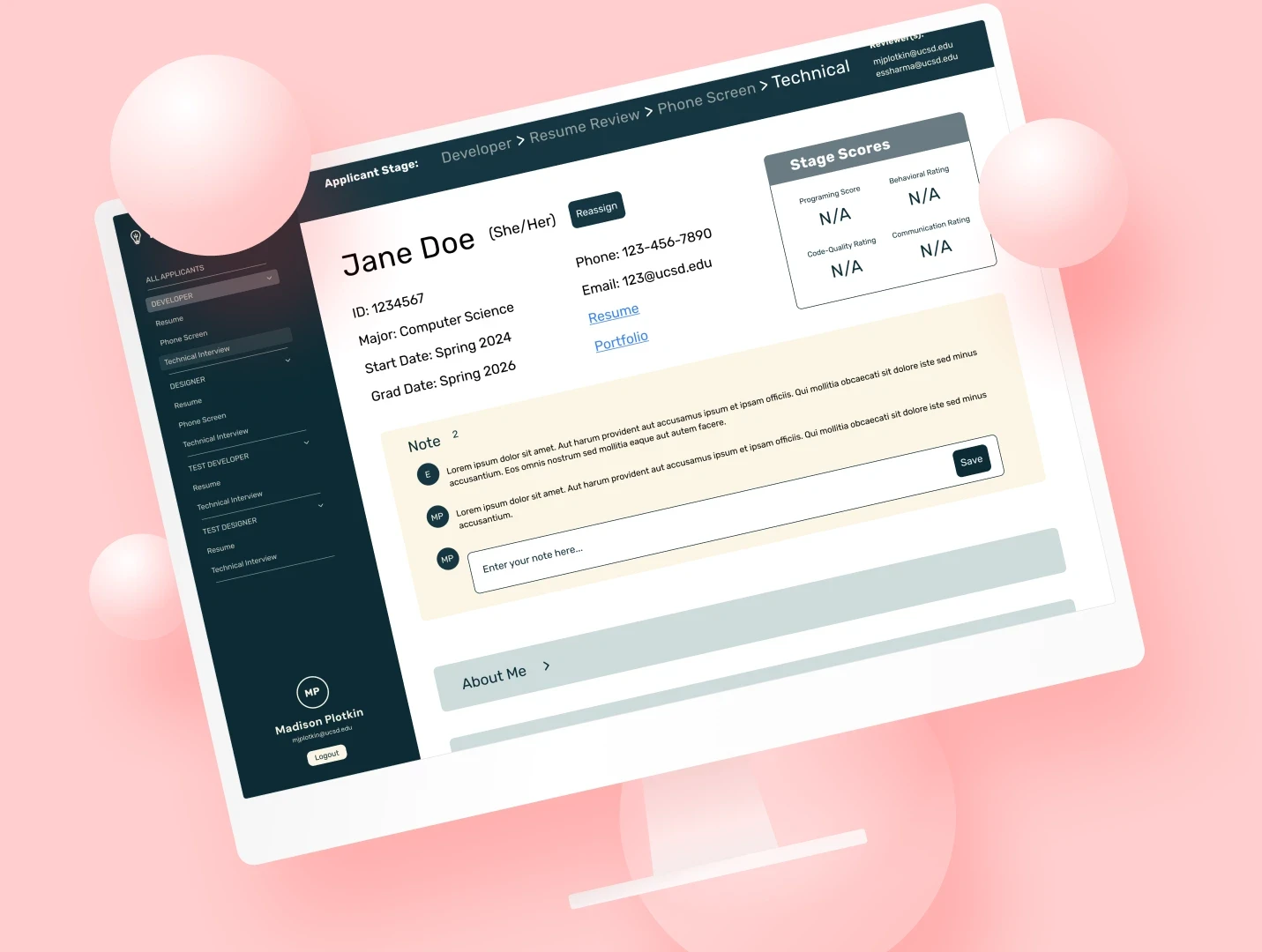
A centralized platform designed to streamline clinic operations, reduce friction across workflows, and improve visibility for veterinary teams.
Product Design
Operations Platform
System Design

Platform
Desktop, Web Application
Timeline
10 weeks
Team
June Lee
David Nguyen
Andy Metcalf
Alexa Der
Min Li
Overview
Veterinary clinics rely on multiple disconnected tools to manage scheduling, patient care, inventory, and communication. I identified that this fragmentation creates inefficiencies across daily workflows—forcing staff to switch between systems, repeat tasks, and lose visibility into critical operations.
This revealed an opportunity to design a unified system that reduces operational friction and better supports how clinics actually work day-to-day.
Problem
Daily operations are scattered and inefficient
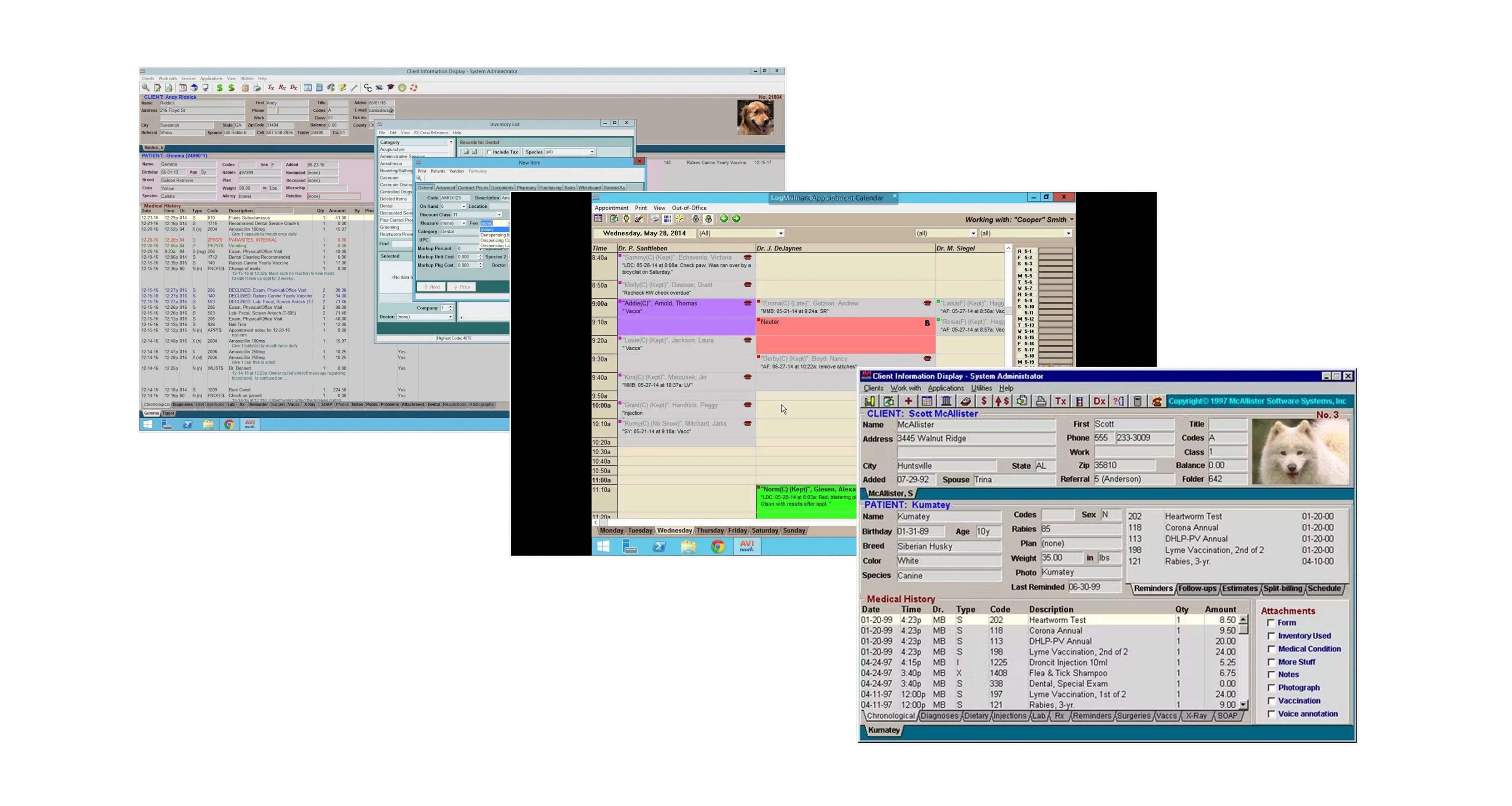
Clinics rely on multiple disconnected systems
Outdated tools are slow and difficult to use
Interfaces are cluttered and overwhelming
Simple tasks require too many clicks
“Contacting staff through email. Booking through website. Inventory through Avimark. Billing through Weave.”
Objective
To address this, I focused on:
Streamline daily workflows
Reduce cognitive load
Centralize key information
Improve operational visibility
Research & Insights
I conducted surveys and outreach with veterinary staff and clinics to understand real workflows and pain points.
Key Insights
Fragmented systems create inefficiency
Existing tools feel old and clunky
Interfaces are click-heavy and overwhelming
Staff need quick, glanceable information
“Not intuitive… looks like it was coded in the dot-com era.”
→ This revealed that the core issue wasn’t just fragmented tools, but the lack of a centralized system for coordination and communication.
Understanding the Workflows
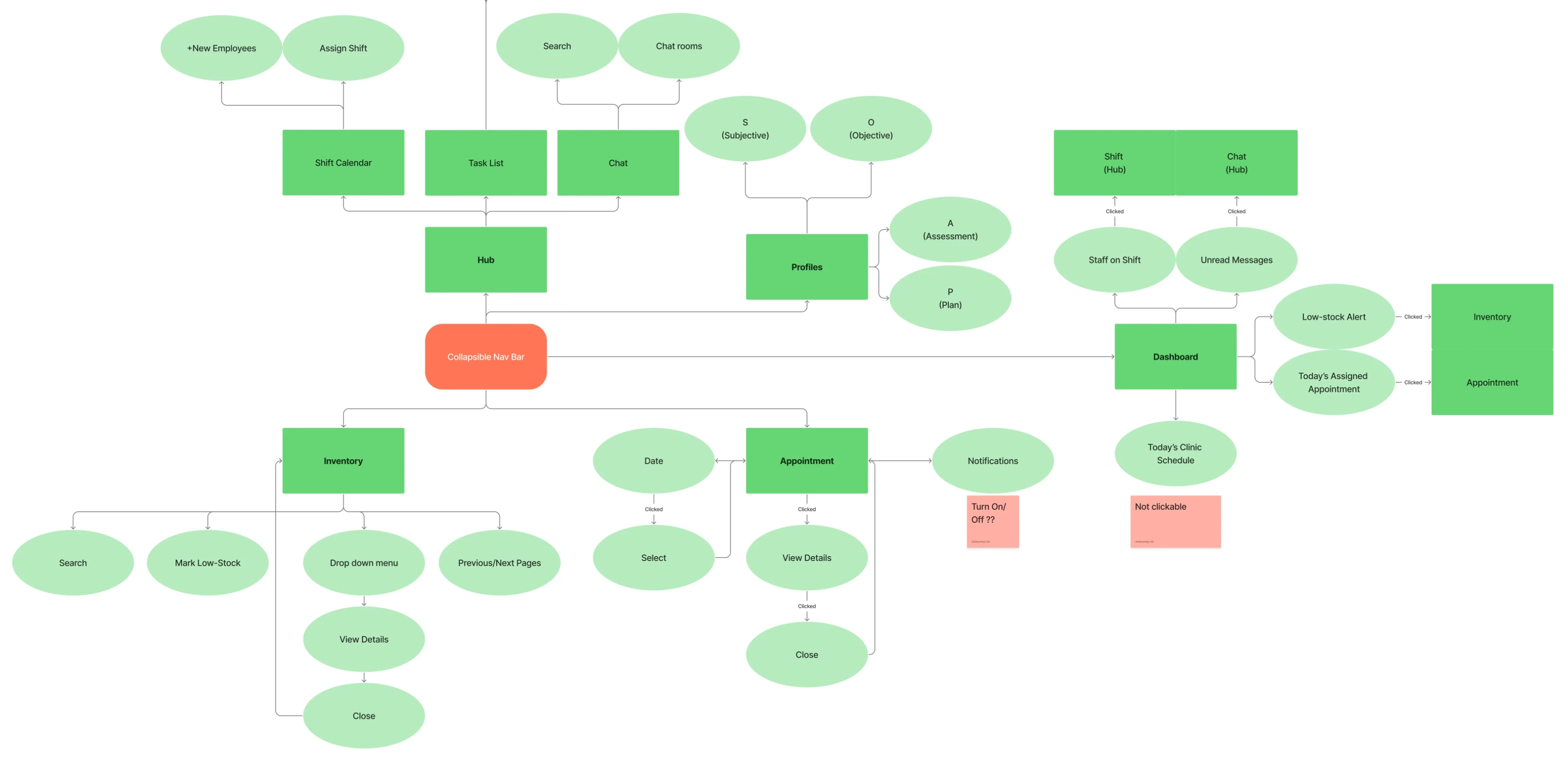
I mapped core clinic operations including scheduling, patient records, inventory, and staff coordination.
Key Friction Points:
Switching between multiple systems
Inefficient scheduling workflows
Poor visibility into inventory and operations
Design System
Established a consistent visual system to unify workflows across the platform
Standardized components to improve scalability and reduce visual complexity
Designed clear hierarchy to support quick scanning and efficient use
Reduced click depth to streamline daily tasks
Solution
I proposed a centralized platform that connects scheduling, inventory, and daily operations into one streamlined system.
Dashboard
Real-time overview of daily operations, helping staff quickly understand patient volume, priorities, and alerts at a glance.

Scheduling
Doctor-first layout with a clear time structure, supporting appointment scheduling, vet assignment, and reminder workflows.
Inventory
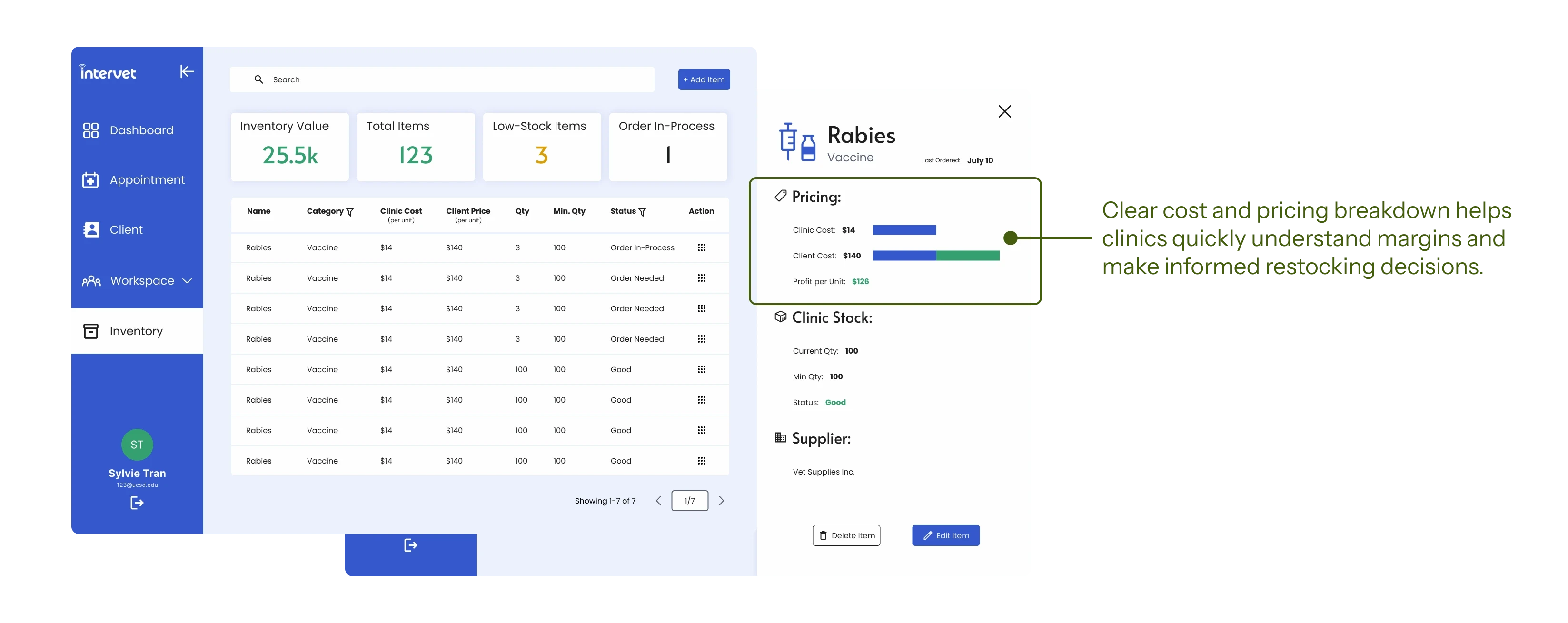
Track stock, usage, and financial data in one place, with tools for managing low-stock alerts and reviewing item details.
“It shows how much you spent versus how much you're selling… to estimate profit margins.”
Workspace (Operations Center)
Central coordination layer that connects tasks, staff management, and communication—serving as the operational core of the system.
Manage ongoing and completed tasks
Assign shifts and responsibilities
Built-in chat for real-time communication between staff and veterinarians
Role-Based System
Different access levels for staff and veterinarians ensure the platform reflects real responsibilities and workflows.
Staff → scheduling, task execution, communication
Veterinarians → oversight, decision-making, patient care
Usability Testing
I tested the prototype with veterinary staff and iterated based on workflow feedback.
Key Improvements:
Adjusted scheduling layout to match real clinic expectations
Improved hierarchy in appointment views
Enhanced inventory with cost vs. revenue insights
Added visual cues for faster comprehension
Why This Matters
By centralizing scheduling, inventory, and communication into one platform, Intervet reduces the need for clinics to rely on multiple disconnected tools.
This allows staff and veterinarians to spend less time managing systems and more time focusing on patient care while improving coordination and visibility across daily operations.
Reflection
This project strengthened my ability to design for complex systems; balancing multiple workflows while prioritizing clarity, efficiency, and real-world usability.
Intervet rethinks how clinics operate by turning fragmented workflows into one seamless system.
Explore the Prototype here